

21/08/2026
Key Takeaways
When selecting modified tapioca starch for industrial food production, manufacturers should consider both the desired product properties and actual production conditions. Key factors include viscosity, texture, stability, heat, acidity, mechanical shear, freezing, and reheating, as these conditions can affect starch performance.
Testing the starch in the actual formulation and production line is therefore an important step before Commercial Production. Working with a supplier that provides Technical Support & Co-development can also help manufacturers select and adapt the starch to better suit their products and production processes.
Table of Content
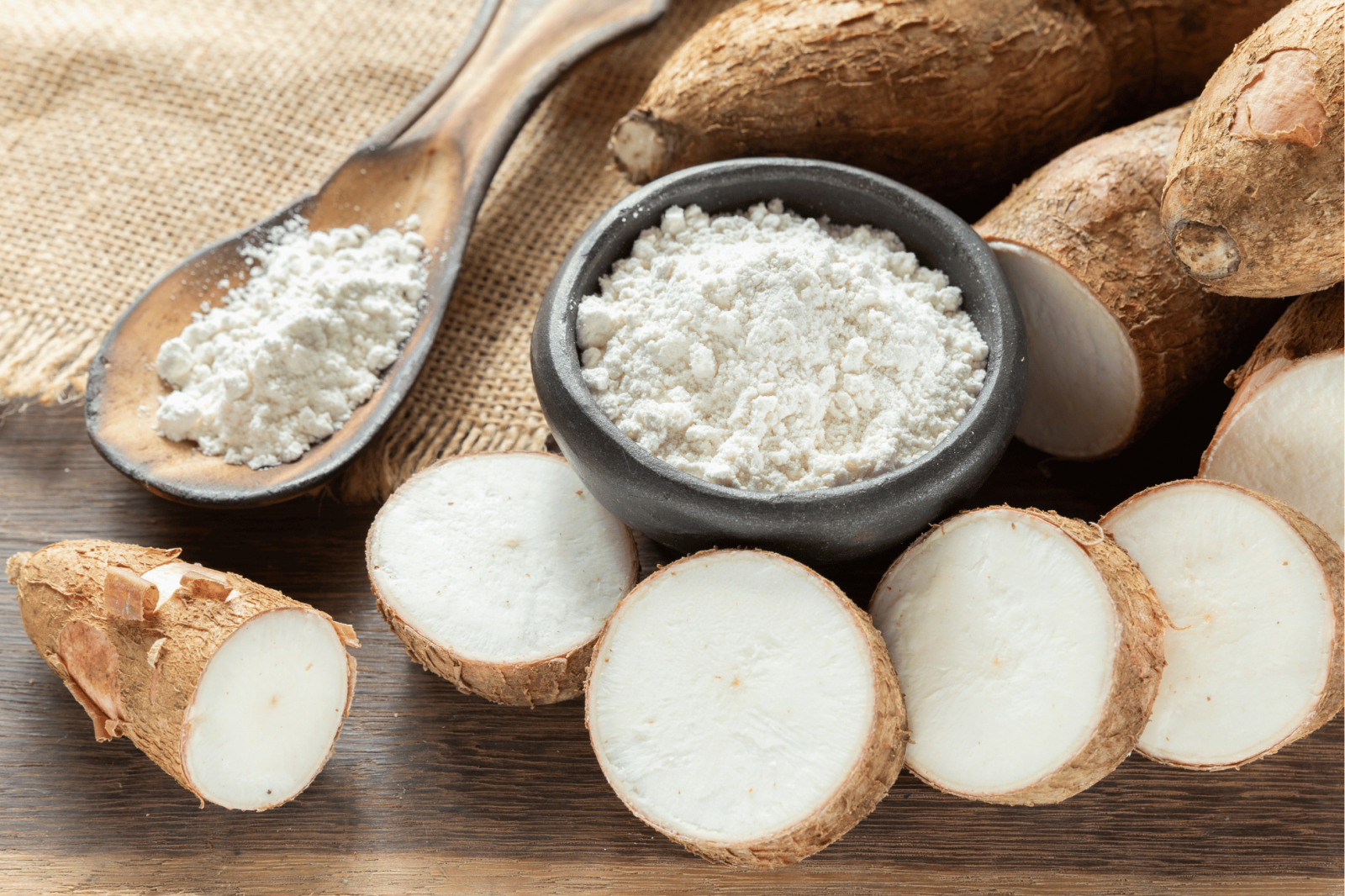
Modified tapioca starch, or modified starch, is an ingredient that plays an important role in determining food product quality, including viscosity, texture, and stability.
However, in industrial food production, selecting the right starch depends on more than the type of product. Manufacturers must also consider the formulation, production conditions, machinery, and storage methods.
A starch that performs well in one product may produce different results when used in another formulation or production line. Selecting modified tapioca starch for industrial applications should therefore begin by understanding what properties the final product requires and what conditions the starch will encounter throughout the production process, followed by testing and adjustment under actual production conditions.
When selecting modified tapioca starch for industrial food production, manufacturers should not consider only the starch type or the type of food product. Starch performance is also influenced by other ingredients in the formulation and the conditions encountered during processing.
For example, a sauce exposed to high temperatures may require a starch that can maintain viscosity under those processing conditions. Frozen foods require consideration of stability after freezing and thawing. Products processed through high-speed mixers or pumps must also account for mechanical shear, which may affect the starch structure.
Therefore, before selecting a starch, manufacturers should evaluate both the desired Product Requirements and actual Production Conditions
Before determining which starch to use, manufacturers should first clearly define the properties they expect the starch to create or maintain in the final product.
Viscosity and texture directly influence the consumer experience, particularly in products such as:
Starch selection should therefore begin by defining the desired product characteristics—for example, the required thickness, smoothness, elasticity, or specific texture. This makes it easier to identify starch properties that are more suitable for the formulation.
Separation or syneresis may occur during storage or after a product has undergone freezing and thawing, affecting both appearance and texture.
For products at risk of these issues, manufacturers should consider starches that can help maintain product structure and stability under the required storage conditions, helping ensure consistent quality through to consumption.
In industrial-scale production, consistency between batches is another important consideration. Variations in viscosity, texture, or product structure can affect product standards.
Selecting a starch suited to both the formulation and production conditions can therefore help manufacturers maintain more consistent product quality across production batches.
Once the desired product properties have been defined, the next step is to analyze the conditions the starch will encounter during production. Heat, acidity, mechanical shear, and freezing can each affect starch performance differently.
Products exposed to high-temperature processing, such as sauces or retort foods, require consideration of whether the starch can maintain its structure and viscosity under those conditions.
If the starch is not suitable for the processing temperature or heating duration, product viscosity may change and affect quality after production.
pH is another important condition to consider, particularly for products such as sauces and certain salad dressings, because acidity combined with heat can affect starch stability.
Starch selection for these products should therefore consider the formulation composition, pH level, and heating conditions together.
In industrial production lines, ingredients may pass through mixers, pumps, or other equipment that generates mechanical shear, which can affect starch structure and viscosity.
For processes involving high shear, manufacturers should consider starches with properties suitable for these conditions to help maintain the required viscosity and product quality after processing.
For frozen and ready-to-eat foods, evaluating the product immediately after production may not be sufficient. Products may subsequently undergo storage, transportation, thawing, or reheating before consumption.
Manufacturers should therefore evaluate whether the starch can help maintain stability under these conditions to reduce syneresis, separation, or changes in texture throughout the product's shelf.

Even after selecting a starch based on its technical properties, testing it in the actual formulation remains an important step.
The final result depends not only on the starch itself but also on other ingredients in the formulation, usage level, mixing sequence, temperature, and production equipment.
Sample testing allows the R&D team to evaluate product viscosity, texture, and stability before moving to a larger production scale.
However, laboratory-scale results may differ from actual production. During scale-up, manufacturers may therefore need to adjust the formulation or processing conditions to match the machinery and production process of each factory.
Starch selection should therefore be viewed as a continuous process:
Define Product Requirements → Select Starch → Formulation Trial → Adjust Formulation and Process → Test on the Actual Production Line → Commercial Production
Developing a new product or improving an existing formulation may require multiple trials, particularly when raw materials, formulation, and Production Conditions need to work together effectively.
Working with a modified tapioca starch supplier that provides Technical Support and has an R&D team can therefore offer value beyond selecting ingredients based solely on Specifications.
The process can begin by understanding the manufacturer's challenges or desired product properties, followed by selecting an appropriate starch for testing under actual application conditions.
A Co-development approach can also connect different stages of the development process—from formulation trials and Texture Design to production process adjustments and implementation in Commercial Production—helping create a more systematic product development process.
Selecting modified tapioca starch for industrial production does not end with comparing ingredient types or Specifications. Manufacturers should consider the entire process—from desired product properties and formulation to processing conditions, trials, and implementation on the actual production line.
Toyota Tsusho (Thailand), as a modified tapioca starch supplier for industrial manufacturers, provides ingredient solutions designed to meet production requirements.
Our support covers starch selection, sample provision for testing, Co-development with customers, Texture Design, and adaptation to actual production processes—supporting product development from the trial stage through to Commercial Production.
Learn more about Toyota Tsusho (Thailand) through our corporate profile video and explore our Lifestyle businesses.
For more information, please contact us at +66 (0)2-825-5555.
A: Start by defining the desired product properties, such as viscosity, texture, and stability. Then consider the conditions the starch will encounter during production, including heat, acidity, mechanical shear, and freezing, before selecting an appropriate starch for testing in the actual formulation.
A: Starch performance is influenced by other ingredients in the formulation, as well as usage level, temperature, pH, and production conditions. Therefore, when the formulation or processing conditions change, the resulting viscosity, texture, and stability may also differ.
A: Sample testing allows the R&D team to evaluate whether the starch delivers the desired properties in the formulation before scale-up and testing on the actual production line. This step helps manufacturers adjust the formulation and processing conditions before moving to Commercial Production.
A: Yes. Mixers, pumps, and other production equipment can generate shear forces that affect starch structure and viscosity. Starch selection should therefore consider actual production-line conditions.
A: A supplier with Technical Support and R&D capabilities can assist with starch property selection, formulation trials, Texture Design, and adaptation to actual production processes. Toyota Tsusho also provides a Co-development approach to support product development
together with customers.
References

 TTTC Audit