

24/09/2026
Key Takeaways
Before selling scrap steel from a factory, manufacturers should begin by identifying the type, volume, source, and condition of the scrap material. Scrap should also be systematically sorted and stored at the source to minimize contamination and make subsequent valuation, weighing, and handling easier.
Factories should also determine whether the scrap being removed from the premises falls under applicable requirements for industrial waste or unused materials, as regulatory requirements and documentation may vary depending on the type of material and the method of handling.
Choosing a service provider should therefore involve more than comparing purchase prices. Factories should also consider the provider's weighing system, transportation capabilities, traceability, and the final destination of the scrap, helping ensure that steel scrap can be appropriately recycled and returned to the production cycle as a raw material.
Table of Contents
Steel scrap generated from stamping, cutting, machining, or leftover metal components in manufacturing processes is more than simply material that needs to be removed from a factory. When properly sorted and managed, these scrap materials can retain value and be recycled into raw materials for future use.
However, selling factory scrap steel involves more than comparing prices and arranging for a truck to collect the material. Factories should consider the type and volume of scrap, sorting, regulatory requirements, weighing and transportation, and the material's final destination.
This article outlines what factories should know and prepare before selling scrap steel.
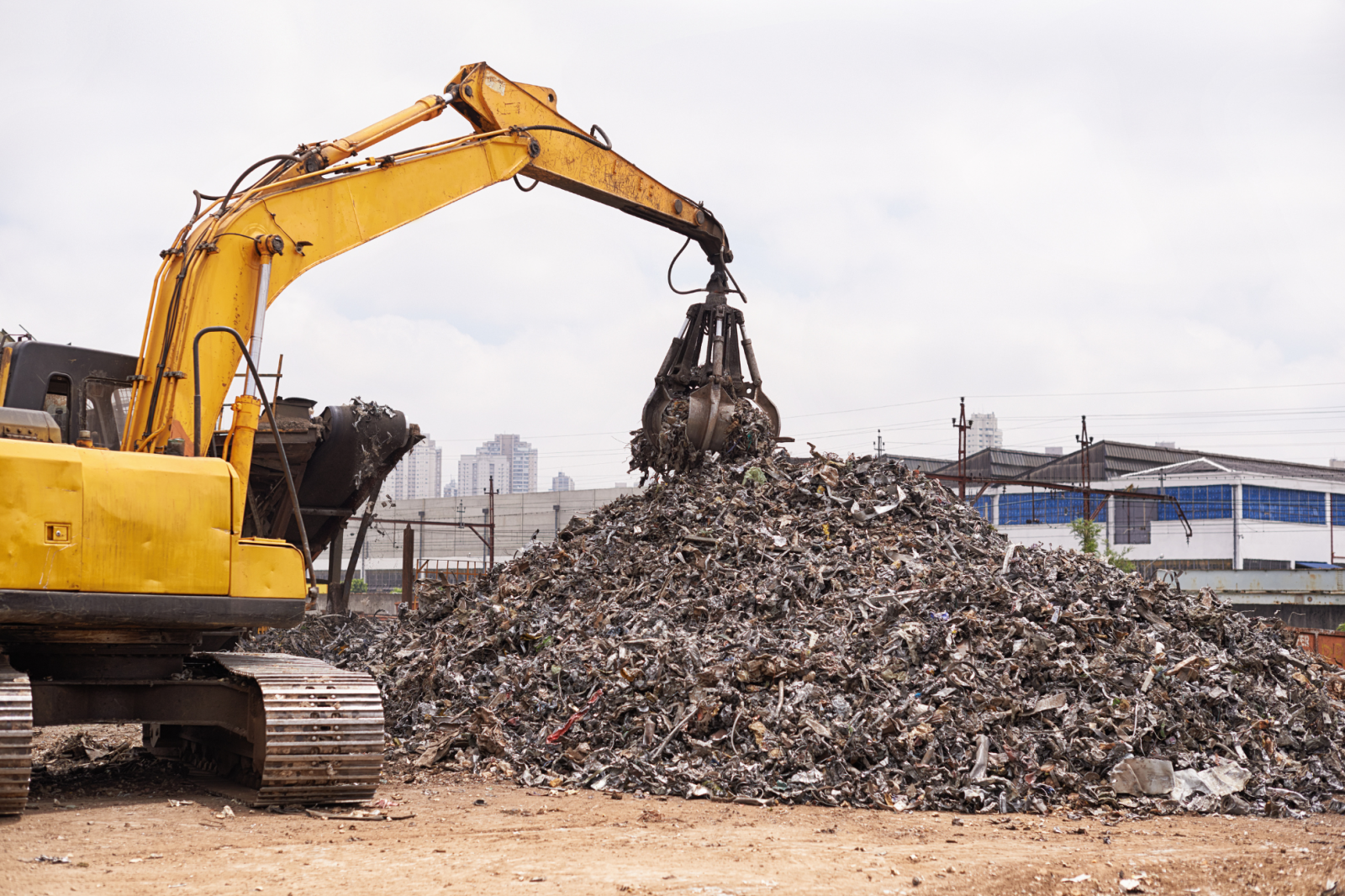
Preparing the necessary information before contacting an industrial scrap steel buyer helps ensure that the scrap can be properly assessed and that an appropriate management plan can be developed.
Begin by identifying the types of scrap generated by the factory, such as:
Factories should also estimate the approximate volume, frequency, and points within the production process where the scrap is generated.
This information affects the planning of storage areas, scrap collection schedules, and logistics, while helping the service provider assess an appropriate purchasing and handling approach.
Scrap should be separated by metal type at the source to reduce cross-contamination and make inspection, weighing, and subsequent recycling easier.
The Department of Industrial Works (DIW) classifies methods for managing unused materials using specific codes. Examples include Code 011 for Sorting and Code 021 for Storage in Containers.
In practice, factories can designate separate areas or containers for each type of scrap and clearly label them so that sorting begins at the point where the scrap is generated.
Before removing scrap from the factory, businesses should determine whether the material is classified as industrial waste or unused material under applicable regulations, as different types of materials and management methods may be subject to different requirements.
The DIW provides relevant systems, including applications for permission to remove industrial waste or unused materials from factory premises (Ko.O.1), reporting systems for the management of industrial waste or unused materials (Ko.O.2), and information on Waste Processors (WP).
Factories should therefore verify the requirements applicable to their specific case before proceeding.
For factories that generate scrap regularly, an on-site survey allows the service provider to understand the scrap generation points, storage areas, and transportation routes.
This information can then be used to design an appropriate Collection and Logistics system.
Once the preliminary information has been prepared, the scrap selling and management process can generally be divided into six steps.
Assess the type, volume, generation points, and storage areas of the scrap to understand the scope of the operation.
Separate the scrap by metal type and grade and check for contamination before determining the appropriate valuation and management method.
Clearly establish the purchase price, weighing method, collection schedule, transportation costs, and other applicable terms.
A verifiable weighing system should be used to ensure transparency when calculating the value of the scrap.
Collection schedules should be planned according to scrap volumes and available storage capacity.
Where materials are subject to regulations governing industrial waste or unused materials, the collection and transportation process should comply with the applicable requirements.
Depending on its type and condition, scrap may undergo cutting, baling, grading, or material separation before being transferred into the recycling process.
.png)
In addition to market prices, the type, grade, volume, condition, and level of contamination of scrap all influence its valuation and its potential for further use.
For example, scrap that has been clearly separated by type at the source is generally easier to manage than material containing a mixture of different metals.
According to the World Steel Association, an important quality consideration for scrap used in steel production is the level of residual elements, such as copper and tin. Even small quantities can contribute to surface cracking during hot rolling, forming, and stamping, particularly in products with demanding specifications such as automotive sheet steel.
Sorting and Separation therefore play an important role in controlling contaminants before scrap is returned to the steel production process.
Factories should consequently consider not only “How much can we sell the scrap for?” but also “How is the scrap sorted and managed to preserve its material value?”
Selecting a service provider should not be based solely on who offers the highest purchase price. Factories should consider the provider's ability to manage scrap throughout the process, including:
For materials classified as industrial waste or unused materials, Thailand's Ministry of Industry Notification on the Management of Industrial Waste or Unused Materials B.E. 2566 (2023), effective from November 1, 2023, applies the Polluter Pays Principle (PPP), under which waste generators remain responsible from the point of generation until the material has been completely managed.
Choosing an end-to-end scrap management service can therefore help factories systematically manage the process from sorting and weighing through transportation and recycling.
.png)
Toyota Tsusho (Thailand) provides end-to-end scrap steel management services, from on-site surveys and analysis of scrap types and volumes to designing sorting and collection systems.
Services also include processing activities such as cutting, baling, and grading, as well as Logistics planning to transfer materials into the recycling process.
The service covers both ferrous scrap and non-ferrous metals, including aluminum, stainless steel, copper, and special alloys, supported by a weighing system that enables transparent reporting and traceability.
Turn scrap generated from your manufacturing process back into a valuable resource
through systematic management from the source through recycling. Contact us or call 02-825-5555.
Learn more about Toyota Tsusho (Thailand) through our company introduction video
and explore other businesses providing solutions for the industrial sector.
A: Before selling scrap steel, factories should prepare information on the type, volume, generation points, and condition of the scrap and ensure that it is appropriately sorted and stored. This allows the buyer to evaluate the material and plan transportation.
If the scrap being removed from the factory is classified as industrial waste or unused material, the factory should also check the applicable requirements and documentation for removing and managing the material outside the factory premises.
A: Sorting makes it easier to identify the type and volume of each scrap category, reduces contamination with other metals or materials, and facilitates valuation, weighing, and subsequent handling.
This is particularly important for scrap intended for recycling because material quality and contamination levels affect its suitability for reuse as a raw material in steel production.
A: Scrap steel prices depend on several factors, including market prices, metal type and grade, volume, material condition, and contamination levels.
Scrap consisting of a single metal type and clearly separated at the source may therefore be evaluated differently from mixed or contaminated scrap. The actual material and purchasing conditions at the time of sale should be assessed by the buyer.
A: Factories should not consider only the company offering the highest price. They should also evaluate the provider's scrap-management capabilities, verifiable weighing system, transportation arrangements, suitability of the waste processor, and the final destination of the material.
For scrap classified as industrial waste or unused material, factories should verify that the processor and management method comply with applicable requirements so that the material can be traced from its source to its final destination.
A: After leaving the factory, scrap steel may undergo sorting, grading, cutting, baling, or contaminant separation, depending on its type and condition, before being transferred to the recycling process.
Properly prepared steel scrap can be reused as a raw material for new steel production, allowing scrap generated during manufacturing to re-enter the resource cycle.
References
 TTTC Audit